There comes a point in every choral concert preparation when the music begins to move beyond the notes on the page. We have learned the rhythms, worked through the difficult passages, considered the text, and have begun to discover how the individual elements fit together into a larger musical experience. At that point, it is tempting to become completely focused on getting everything right. As choral singers, we want to do our best. We want the entrances to be together, the vowels to be unified, the dynamics to be expressive, the harmonies to be in tune, and the words to communicate their meaning. We work toward musical excellence because the music deserves nothing less.
But there is an important distinction between excellence and perfection. Perfection is an elusive goal. No matter how carefully we prepare, there will always be something that could have been slightly better. A vowel might not be quite as unified as we wanted, an entrance might be a fraction late, or a difficult passage might not have the clarity we imagined during rehearsal. We can, and should, continue to refine those things. But if perfection becomes our primary goal, we risk overlooking something much more important, and that is why we sing in the first place.
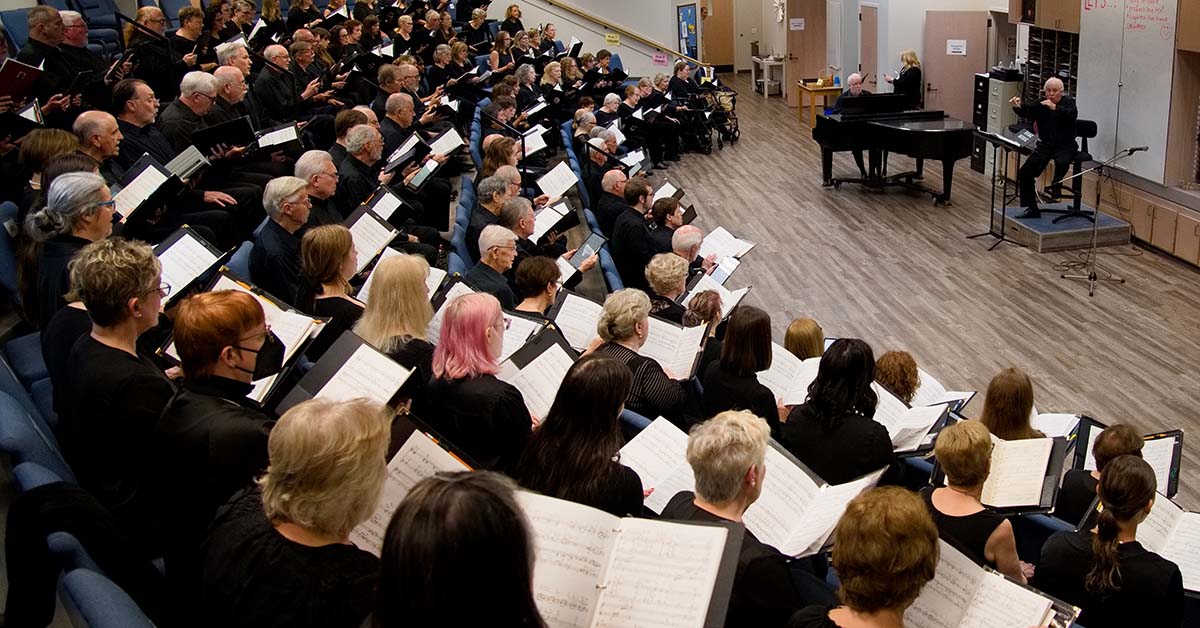
I was reminded of this recently as my own chorus, The Michael O’Neal Singers, reached the latter stages of preparing for our upcoming concert, Feel the Spirit. The program includes a number of African American spirituals and culminates in John Rutter’s Feel the Spirit, a work filled with energy, tenderness, rhythmic vitality, and joy. As we rehearsed, I found myself encouraging the singers to do something that can sometimes be surprisingly difficult: enjoy themselves. That may sound almost too obvious. After all, isn’t singing supposed to be enjoyable? Yet serious musicians know that rehearsals can easily become exercises in correction. We stop and start, isolate a troublesome passage, repeat a rhythm, work on diction, adjust balance, and listen critically to what we are doing—and then we do it again. All of that is necessary. It is part of the work of transforming music from something printed on a page into something alive. But the work itself should not cause us to lose sight of the joy that brought us into the room in the first place.
There is something remarkable about choral singing that has little to do with musical perfection. We gather with other human beings and attempt to create something together that none of us could create alone. We listen to one another, breathe together, adjust to one another, and support one another. Eventually, if we are fortunate, something happens: the music begins to feel less like a collection of individual voices and more like a single musical expression. We become part of something larger than ourselves. That transformation is one of the great mysteries and rewards of choral singing.
The benefits of singing together are both tangible and intangible. We develop musical skills. We learn to listen more carefully and become more sensitive to rhythm, pitch, language, balance, and expression. We develop discipline and perseverance, and we discover repertoire we might never have encountered on our own. But there are other benefits that cannot be measured quite so easily. We form friendships. We experience belonging. We share a common purpose with people of different ages, backgrounds, personalities, and experiences. We discover that our individual contribution matters, and that it becomes even more meaningful when combined with the contributions of others. In a world that can sometimes feel increasingly fragmented and disconnected, there is something deeply affirming about standing shoulder to shoulder with other people and creating something beautiful together.
Perhaps most importantly, we experience joy. And that joy is not merely something we experience as singers; it is something we can give away. An audience may not know whether every entrance was perfect or notice every small adjustment we made during rehearsal. They may not know how many times we worked through a difficult passage before arriving at the concert. But they can sense whether the people onstage believe in what they are doing. They can feel energy, commitment, warmth, exuberance, tenderness, and connection. The audience receives something from our singing, but so do we.
That is why I believe the pursuit of excellence and the pursuit of joy should never be regarded as competing goals. They belong together. We work hard because excellence matters. We listen carefully, correct our mistakes, and keep refining the music because we respect the composer, the audience, and one another. But we also need to lift our eyes occasionally from the details and remember what a privilege it is to be doing this at all. The rehearsal room should be a place where we are willing to work hard and where we can also laugh, enjoy one another, and experience the satisfaction of making progress together.
We will never achieve perfection, and I have come to believe that we should not make perfection the measure of our success. What we can achieve is excellence, which is the result of preparation, discipline, listening, cooperation, and a willingness to keep learning. But even excellence is not the whole story. Along the way, we can experience something perhaps even more valuable: the extraordinary joy of making music together and then sharing it with others.
That, ultimately, is why we sing.
Michael O’Neal