For more than four centuries, the words of William Shakespeare have inspired composers across cultures, eras, and musical styles. His unparalleled command of language – by turns witty, sensual, playful, anguished, and transcendent – offers an expressive depth that seems tailor-made for music. Shakespeare in Love explores this enduring relationship between text and sound through choral works spanning more than a century, from Ralph Vaughan Williams to contemporary composers, unified by Shakespeare’s meditations on love.
Love, in Shakespeare’s world, is never simple. It is idealized and ironic, passionate and painful, tender and volatile. The selections in our program draw from both his plays and sonnets, illuminating love in its many guises: romantic devotion, longing, joy, loss, and reflection. Though the musical languages of these composers differ widely, Shakespeare’s words provide a timeless thread that binds the program together. Throughout the program, selected Shakespeare sonnets are spoken by members of Kaleidoscope, allowing the poetry to be heard in its original, unaccompanied form.
While every other text in the program comes directly from Shakespeare’s plays and sonnets, the concert opens with a thoughtful exception – one that frames the entire program by celebrating music itself as an expression of love. While the title, If Music Be the Food of Love, does indeed come from Duke Orsino’s famous opening line in Shakespeare’s Twelfth Night, the poem itself is by Henry Heveningham, a seventeenth-century poet who echoes Shakespeare’s sentiment that music and love are deeply entwined. David C. Dickau’s setting is luminous and expansive, unfolding with a sense of wonder and generosity. As an opening work, it invites both singers and listeners into a space where music becomes an act of devotion – preparing us for Shakespeare’s world of emotional richness and poetic beauty.
The text of O Mistress Mine, the third of Ralph Vaughan Williams’s Three Elizabethan Part Songs, is drawn from Shakespeare’s Twelfth Night and offers a gentle invitation to love that balances urgency with wistful reflection. Vaughan Williams’s setting captures the text’s intimate, conversational quality through warm harmonies and flowing, folk-like melodic lines. Though composed in the early twentieth century, the music evokes the spirit of Elizabethan song, reflecting Vaughan Williams’s deep interest in English musical heritage. Love here is tender and persuasive, tinged with the awareness that time is fleeting and opportunity must be seized.
Serenade to Music stands as one of the most cherished choral works of the twentieth century and represents a profound union of poetry, music, and human connection. Vaughan Williams selected a passage from The Merchant of Venice in which Lorenzo speaks of the harmony of the cosmos – how the movements of the stars create a music beyond human hearing, and how those who are unmoved by music are incapable of true feeling. The text is both philosophical and deeply lyrical, contemplating music as a moral and spiritual force.
Composed in 1938, the work was written as a personal tribute to the conductor Sir Henry Wood and the singers with whom Vaughan Williams had collaborated throughout his career. Originally conceived for sixteen individual vocal soloists, the piece embodies a sense of intimate conversation and communal expression, with melodic lines that seem to rise organically from the text. Even in choral form, the music retains this conversational quality, allowing the words to unfold naturally within a glowing harmonic landscape.
Vaughan Williams’s score is marked by long, arching phrases, gentle rhythmic flow, and radiant harmonic warmth. Rather than dramatic contrast, the piece unfolds with an almost timeless serenity, inviting listeners into a space of contemplation. Love, as presented here, is elevated and universal – bound not only to human relationships but to beauty, order, and the very fabric of the universe. As a centerpiece of the program, Serenade to Music offers a moment of stillness and reverence, reminding us of music’s power to reflect the deepest truths of the human spirit. Our performance features vocal soloists from the ensemble, violinist Holly Mulcahy and pianist Allen Baston.
George Shearing’s Songs and Sonnets from Shakespeare offers a strikingly different, yet equally compelling, perspective on Shakespeare’s texts. Best known as an influential jazz pianist and bandleader, Shearing brings a rhythmic vitality and harmonic color that refreshes Shakespeare’s language without sacrificing its integrity. The result is a set of seven pieces that feel both sophisticated and immediately engaging.
The collection draws from Shakespeare’s sonnets as well as texts from his plays, presenting a wide emotional range – from playful flirtation and irony to tenderness and introspection. Shearing’s musical language blends classical choral textures with jazz-influenced harmonies, syncopation, and an underlying sense of swing. These elements lend the music a buoyant energy and conversational ease, allowing the text to feel alive and contemporary.
Despite their stylistic freshness, Shearing’s settings are deeply respectful of Shakespeare’s words. The clarity of the text remains paramount, with melodic shapes and rhythmic patterns carefully crafted to enhance the natural inflection of the poetry. Moments of humor and lightness are balanced by passages of lyrical warmth, reflecting Shakespeare’s ability to capture both the joys and complexities of love.
Swedish composer and jazz pianist Nils Lindberg offers a tender, lyrical setting of one of Shakespeare’s most famous sonnets in Shall I Compare Thee to a Summer’s Day? The music gently unfolds with warmth and restraint, mirroring the poem’s meditation on beauty, time, and the promise of love preserved through art. Lindberg’s setting underscores the universality of Shakespeare’s language and its continued resonance across cultures and generations.
Emma Lou Diemer’s Three Madrigals look back to the Renaissance tradition of text-driven choral writing while employing a modern harmonic palette. Madrigals were, in Shakespeare’s own time, a popular musical form closely associated with poetic expression and themes of love. Diemer’s settings capture the vivid imagery and emotional contrasts of Shakespeare’s texts, using clarity of texture and expressive nuance to bring the words vividly to life.
John Rutter’s It Was a Lover and His Lass is a buoyant setting of Shakespeare’s pastoral text from As You Like It and celebrates youthful love in full bloom. Rutter’s music sparkles with rhythmic vitality and clear, dance-like textures, mirroring the poem’s joyful imagery of springtime, birdsong, and carefree affection. Though modeled after the madrigal tradition, the piece is unmistakably modern in its harmonic language and playful energy. Love, in this setting, is exuberant, communal, and delightfully uncomplicated.
In contrast to the brightness of It Was a Lover and His Lass, When Daisies Pied, from Love’s Labour’s Lost, offers a more atmospheric portrait of the changing seasons. Rutter’s setting paints the text with crisp articulation and vivid word-painting, capturing both the chill of winter and the rustic pleasures that accompany it. While the poem is less overtly romantic, its affectionate depiction of everyday life and shared experience suggests a quieter, more grounded form of love – rooted in familiarity, tradition, and the rhythms of nature.
The program concludes with a contemporary response to Shakespeare’s texts. David C. Dickau’s Three from Shakespeare is marked by rich harmonies, expressive dissonance, and a deep sensitivity to language. These settings explore love’s complexity and emotional depth, offering moments of introspection and intensity. Ending the program here brings Shakespeare’s words fully into the present, affirming their continued power to inspire new musical voices. Ultimately, Shakespeare in Love affirms that while musical styles evolve, Shakespeare’s insights into love – and the human heart – remain timeless.
Michael O’Neal
If Music Be the Food of Love
Music: David Dickau
Three Elizabethan Part Songs
Music: Ralph Vaughan Williams
3. O Mistress Mine
Sonnet 23: As an unperfect actor on the stage
Serenade to Music
Music: Ralph Vaughan Williams
Sonnet 104: To me, fair friend, you never can be old
Songs and Sonnets
Music: George Shearing
1. Live with me and be my love
2. When daffodils begin to peer
3. It was a lover and his lass
4. Spring
5. Who is Silvia?
6. Fie on sinful fantasy
7. Hey, ho, the wind and the rain
Sonnet 116: Let me not to the marriage of true minds
Shall I compare thee to a summer’s day
Music: Nils Lindberg
Sonnet 73: That time of year thou mayst in me behold
Three Madrigals
Music: Emma Lou Diemer
1. O Mistress mine, where are you roaming?
2. Take, oh take those lips away
3. Sigh, no more, ladies, sigh no more!
Sonnet 130: My mistress’ eyes are nothing like the sun
Birthday Madrigals
Music: John Rutter
1. It was a lover and his lass
3. When daisies pied
Sonnet 29: When in disgrace with fortune and men’s eyes
Three from Shakespeare
Music: David Dickau
1. O Mistress Mine
2. Silvia
3. Lovers Love the Spring
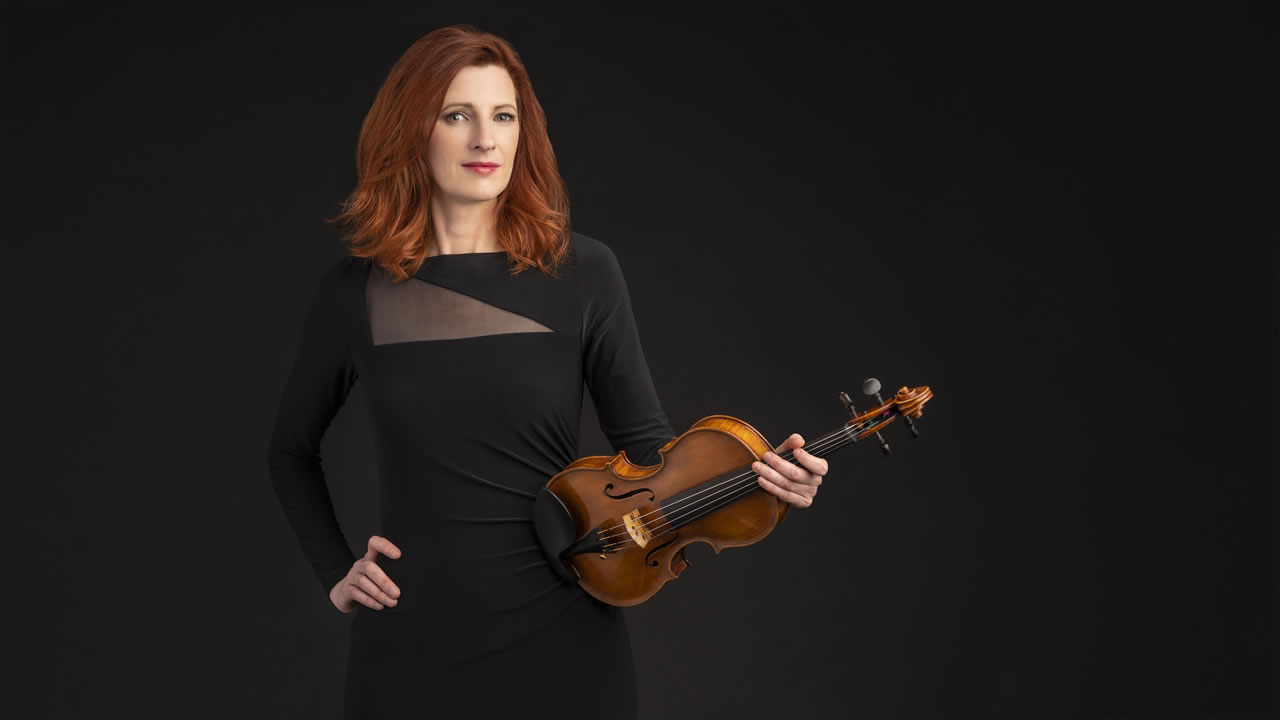
After hearing Scheherazade at an early age, Holly Mulcahy fell in love with the violin and knew it would be her future. Since then, she has won multiple concertmaster positions in symphonic orchestras across the country while maintaining a robust solo career and a small non-profit organization.
Holly is currently serving as concertmaster of the Wichita Symphony Orchestra as well as Wichita Symphony’s Partner for Audience Engagement; a position dedicated to building meaningful relationships with audiences by breaking down stereotypical barriers.
Holly began developing her leadership skills at the renowned Peabody Institute of the Johns Hopkins University with former Baltimore Symphony concertmaster Herbert Greenberg. In recent seasons she has enjoyed serving as concertmaster of the Chattanooga Symphony & Opera, the traveling concertmaster for Emmy Award winner George Daugherty’s Bugs Bunny at the Symphony, and as guest concertmaster for the Columbus Symphony, Baltimore Chamber Orchestra, and Carmel Symphony.
As an in-demand performer, Holly balances her orchestral duties with numerous concerto performances across the country. Passionate about performing living American composers’ works, Holly has been featured as soloist for concertos by Jennifer Higdon, Philip Glass, and concerto written for her by Hollywood film composer, George S. Clinton.
This concerto by George S. Clinton, The Rose of Sonora: a violin concerto in five scenes, is inspired by true stories about the lives of legendary women in the Old West and takes the listener on an epic western adventure of love, loss, and revenge. Booked coast to coast, immediately after the world premiere, Mulcahy and Clinton have received rave reviews and a solid fan following who travel to each performance.
Believing in music as a healing and coping source, Holly founded Arts Capacity, a charitable 501(c)3 which focuses on bringing live chamber music, art, artists, and composers to prisons. Arts Capacity addresses many emotional and character-building issues people face as they prepare for release into society. In addition to an active performing career, Holly is the author of Neo Classical, a column on the future of classical music.
Holly performs on a 1917 Giovanni Cavani violin, previously owned by the late renowned soloist Eugene Fodor, and a bespoke bow made by award-winning master bow maker, Douglas Raguse.
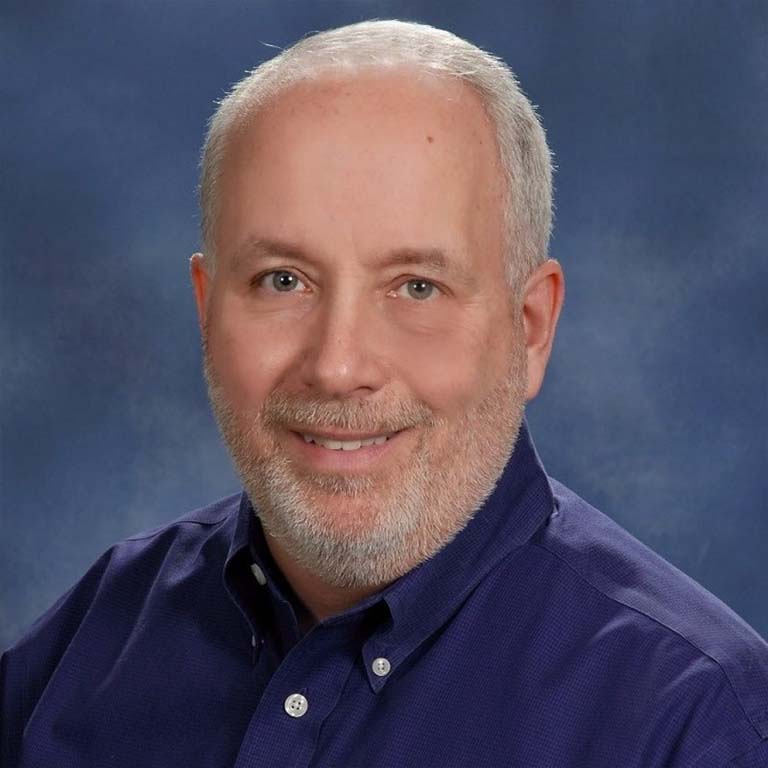
Allen Baston is a seasoned pianist and choral director. He has served as organist for churches in Augusta and Atlanta for 37 years. He is an active vocal, instrumental and choral accompanist and has served on numerous occasions as music director and rehearsal pianist for school and community theatrical productions.
He is an avid player of chamber music, regularly performing in chamber recitals and concerts. Allen plays with Georgia Philharmonic a few times per season.
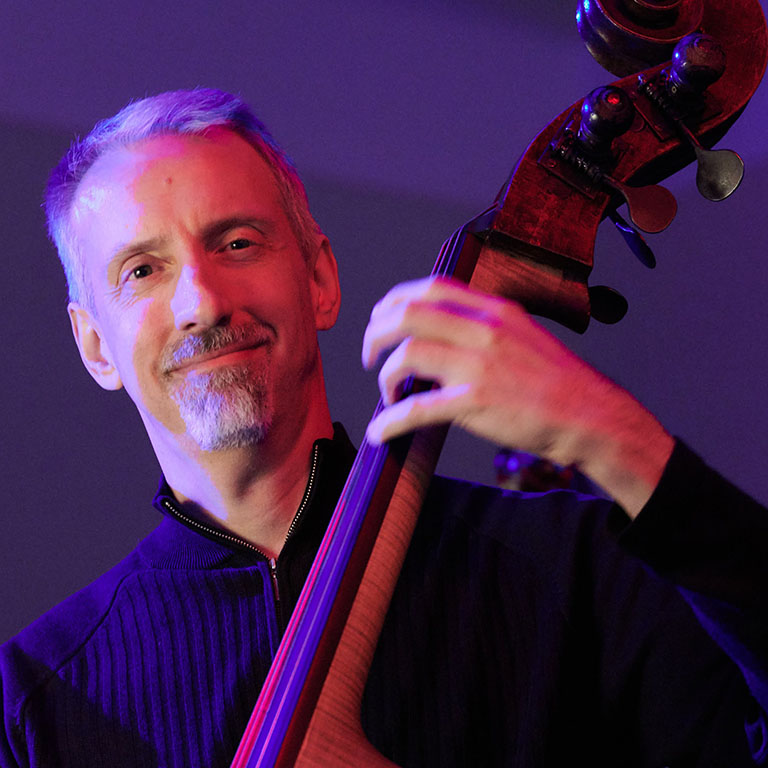
Peter Hildebrandt lives in the Atlanta area, performing classical, jazz, and pops with a variety of music groups throughout Georgia. While primarily a double bassist, he also plays cello.
Principal bassist of the Johns Creek Symphony, Peter has played with numerous orchestras including the Vancouver Symphony, Columbia Symphony, Albany Symphony, International Conducting Workshop and Competition, Georgia Philharmonic, Gwinnett Symphony, New Atlanta Philharmonic, Alpharetta Symphony, Atlanta Wind Symphony, and many others. He has backed K-Pop stars, played Hamilton in the Gwinnett Arena, provided music for The Nutcracker, and been featured in musicals including Cinderella, Annie, Fiddler on the Roof, Candide, Brigadoon, Bye Bye Birdie, West Side Story, Jesus Christ Superstar, A Funny Thing Happened on the Way to the Forum, Man of La Mancha, Joseph and the Amazing Technicolor Dreamcoat, The King and I, Mary Poppins, My Fair Lady, Cinderella, Oklahoma!, and plays jazz with the After Hours Quintet.
On cello, Peter appears on screen in the Hallmark movie Christmas Wishes and Mistletoe Kisses andan upcoming Amazon series and has played for hundreds of weddings and receptions. He is an avid player of chamber music, creating the Georgia Chamber Music Retreat, an annual summer weekend event for sight-reading chamber music, now in its 24th year at Piedmont College in Demorest, GA.
Soprano
Andrea Ferrard
Sarah Flippin
Alisha Graham (soloist)
Susan Hughes (reader)
Sonya Ovbey (soloist)
Jackie Putnam (soloist)
Sarah Sanke (soloist)
Elizabeth Sims
Teya Szabo (soloist)
Alto
Susan Foster
Joanna Grisham
Connie Heefner
Meagan McAninch
Heather Morse
Vicky Rice
Sarah Sangrigoli
Cammie Stephens
Tenor
Ron Eddleman (reader)
Clay Hales
Bill Henderson (reader)
Patrick Maloof
John Petre-Baumer (soloist)
Moisés Prado
Joe Steele
Reece Windjack
Carl Wright (soloist)
Dwayne Wright
Bass
Clark Connelly
Jack Grimes (soloist)
Patrick Lundy (reader)
Gray Plunkett (soloist)
Glenn Rosenkoetter
Bob Rumble (reader)
Tim Shaw
Brit Taylor
Bill Waldorf
If Music Be the Food of Love –Text by Henry Heveningham
If music be the food of love,
Sing on till I am fill’d with joy;
For then my listening soul you move
To pleasures that can never cloy.
Your eyes, your mien, your tongue declare
That you are music everywhere.
Pleasures invade both eye and ear,
So fierce the transports are, they wound,
And all my senses feasted are,
Tho’ yet the treat is only sound,
Sure I must perish by your charms,
Unless you save me in your arms.
O Mistress Mine – Twelfth Night (Act II, Scene 3)
O mistress mine, where are you roaming?
O stay and hear; your true love’s coming,
That can sing both high and low:
Trip no further, pretty sweeting;
Journeys end in lovers’ meeting,
Every wise man’s son doth know.
What is love? ’tis not hereafter;
Present mirth hath present laughter;
What’s to come is still unsure:
In delay there lies no plenty;
Then come kiss me, sweet and twenty,
Youth’s a stuff will not endure.
Serenade to Music – The Merchant of Venice (Act V, Scene 1)
How sweet the moonlight sleeps upon this bank!
Here will we sit, and let the sounds of music
Creep in our ears: Soft stillness and the night
Become the touches of sweet harmony.
Look, how the floor of heaven
Is thick inlaid with patines of bright gold:
There’s not the smallest orb which thou behold’st
But in his motion like an angel sings
Still quiring to the young-eyed cherubins;
Such harmony is in immortal souls; But whilst this muddy vesture of decay
Doth grossly close it in, we cannot hear it.
Come, ho! and wake Diana with a hymn!
With sweetest touches pierce your mistress’ ear,
And draw her home with music.
I am never merry when I hear sweet music.
The reason is, your spirits are attentive:
The man that hath no music in himself,
Nor is not moved with concord of sweet sounds,
Is fit for treasons, stratagems and spoils;
The motions of his spirit are dull as night,
And his affections dark as Erebus:
Let no such man be trusted.
Music! Hark! It is your music of the house.
Methinks it sounds much sweeter than by day.
Silence bestows that virtue on it,
How many things by season seasoned are
To their right praise and true perfection!
Peace, ho! The moon sleeps with Endymion
And would not be awak’d! Soft stillness and the night
Become the touches of sweet harmony.
Live with me and be my love – from Sonnets to Sundry Notes of Music
Live with me and be my love,
And we will all the pleasures prove
That hills and valleys, dales and fields,
And all the craggy mountains yields.
There will we sit upon the rocks,
And see the shepherds feed their flocks,
By shallow rivers, by whose falls
Melodious birds sing madrigals.
There will I make thee a beds of roses,
With a thousand fragrant posies,
A cap of flowers, and a kirtle
Embroider’d all with leaves of myrtle.
A belt of straw and ivy buds,
With cotal clasps and amber studs;
And if these pleasures may thee move,
Then live with me and be my love.
If that the world and love were young,
And truth in ev’ry shepherd’s tongue,
These pretty pleasures might me move,
To live with thee and be thy love.
When daffodils begin to peer – The Winter’s Tale (Act IV, Scene 2)
When daffodils begin to peer,
With heigh! the doxy over the dale,
Why, then comes in the sweet o’ the year;
For the red blood reigns in the winter’s pale.
The white sheet bleaching on the hedge,
With heigh! the sweet birds, O how they sing!
Doth set my pugging tooth an edge;
For a quart of ale is a dish for a king.
The lark, that tirralirra chants,
With heigh! With heigh! The thrush and the jay,
Are summer songs for me and my aunts,
While we lie tumbling in the hay.
It was a lover and his lass – As You Like It (Act V, Scene 3)
It was a lover and his lass,
With a hey, and a ho, and a hey nonny no,
That o’er the green cornfield did pass
In the spring-time, the only pretty ring time,
When birds do sing, hey ding a ding, ding;
Sweet lovers love the spring.
Between the acres of the rye,
With a hey, and a ho, and a hey nonny no,
These pretty country folks would lie,
In the spring-time, the only pretty ring time,
When birds do sing, hey ding a ding, ding;
Sweet lovers love the spring.
This carol they began that hour,
With a hey, and a ho, and a hey nonny no,
How that life was but a flow’r
In the spring-time, the only pretty ring time,
When birds do sing, hey ding a ding, ding;
Sweet lovers love the spring.
Spring/When daisies pied – Love’s Labour’s Lost (Act V, Scene 2)
When daisies pied and violets blue,
And lady-smocks all silver-white,
And cuckoo-buds of yellow hue
Do paint the meadows with delight,
The cuckoo then, on every tree,
Mocks married men; for thus sings he, Cuckoo, cuckoo, cuckoo:
O word of fear, Unpleasing to a married ear!
When shepherds pipe on oaten straws,
And merry larks are ploughmen’s clocks,
When turtles tread, and rooks, and daws,
And maidens bleach their summer smocks,
The cuckoo then, on every tree,
Mocks married men; for thus sings he, Cuckoo, cuckoo, cuckoo;
O word of fear, Unpleasing to a married ear!
Who is Silvia? – Two Gentlemen of Verona (Act IV, Scene 2)
Who is Silvia? what is she, that all our swains commend her?
Holy, fair and wise is she; The heaven such grace did lend her,
That she might admired be.
Is she kind as she is fair? For beauty lives with kindness:
Love doth to her eyes repair, To help him of his blindness,
And, being help’d, inhabits there.
Then to Silvia let us sing, that Silvia is excelling;
She excels each mortal thing upon the dull earth dwelling;
To her let us garlands bring,.
Fie on sinful fantasy – The Merry Wives of Windsor (Act V, Scene 2)
Fie on sinful fantasy! Fie on lust and luxury!
Lust is but a bloody fire, Kindled with unchaste desire,
Fed in heart, whose flames aspire
As thoughts do blow them higher and higher.
Pinch him, fairies, mutually; Pinch him for his villainy;
Pinch him, and burn him, and turn him about,
Till candles and starlight and moonshine be out.
Hey, ho, the wind and the rain – Twelfth Night (Act V, Scene 2)
When that I was and a little tiny boy, With hey, ho, the wind and the rain;
A foolish thing was but a toy, For the rain it raineth ev’ry day.
But when I came to man’s estate, With hey, ho, the wind and the rain;
‘Gainst knaves and thieves men shut their gates, For the rain it raineth ev’ry day.
But when I came, alas! To wive, With hey, ho, the wind and the rain;
By swaggering could I never thrive, for the rain it raineth ev’ry day.
But when I came unto my beds, With hey, ho, the wind and the rain;
With tosspots still had drunken heads, For the rain it raineth ev’ry day.
A great while ago the world begun, With hey, ho, the wind and the rain;
But that’s all one, our play is done, And we’ll strive to please you ev’ry day.
Shall I compare thee to a summer’s day? – Sonnet 18
Shall I compare thee to a summer’s day?
Thou art more lovely and more temperate.
Rough winds do shake the darling buds of May,
And summer’s lease hath all too short a date;
Sometime too hot the eye of heaven shines,
And often is his gold complexion dimm’d;
And every fair from fair sometime declines,
By chance or nature’s changing course untrimm’d;
But thy eternal summer shall not fade,
Nor lose possession of that fair thou ow’st;
Nor shall Death brag thou wander’st in his shade,
When in eternal lines to time thou grow’st:
So long as men can breathe or eyes can see,
So long lives this, and this gives life to thee.
Take, O take those lips away – Measure for Measure (Act IV, Scene 1)
Take, O take those lips away, That so sweetly were forsworn;
And those eyes, the break of day, Lights that do mislead the morn:
But my kisses bring again; Seals of love, but sealed in vain.
Sigh no more, ladies, sigh no more – Much Ado About Nothing (Act II., Scene 3)
Sigh no more, ladies, sigh no more; Men were deceivers ever,
One foot in sea and one on shore, To one thing constant never:
Then sigh not so, but let them go, and be you blithe and bonny,
Converting your sounds of woe Into Hey nonny, nonny, hey!
Sing no more ditties, sing no moe, Of dumps so dull and heavy!
Fraud of men was ever so, Since summer first was leafy.
Then sigh not so, but let them go, and be you blithe and bonny,
Converting your sounds of woe into Hey nonny, nonny, hey!
We’re deeply grateful to everyone who chooses to support The Michael O’Neal Singers. Their generosity makes these concerts possible and reminds us that music is not something we create alone, it’s something we share together. If you’d like to join in supporting this work, you can make a gift anytime online.
Legacy
- Ronald B. Burgess
- Fulton County Board of Commissioners
- Chris & Dennis Love
- Lisa & George Gundersen
- F. Mike & Glenda Sullivan Holland
- Hughes Family Charitable Fund
- Judy & Michael O’Neal
- The Estate of Martha Boyd
Founder
- Jackie & Joe Brown
- Sandy & Barney Burroughs
- Rebecca & Clay Hales
- Gail & Lee Herring
- Jan & Glenn Rosenkoetter
Conductor
- Armstrong Donor Advised Fund
- Mary & Joe Griffin
- Diane & James Hargreaves
- Marsha & Allan Kennedy
- Terry & John Murillo
Benefactor
- Thomas Fowlkes
- Jeff Dimond
- Peter Hildebrandt
- Clifford McCune
- Marilyn & Greg Picciano
- William Pu
- Theresa & Willie Smith
- Rachel and Hilary Thornton
- Thomas and Elizabeth Williams
- Kenneth Winkler
Associate
- Tina and Dave Coté
- Kenneth Goodwin
- Karen Kolpitcke
- In honor of Donna & Jack McCoy
- JoAnn Osborne
- Vicky Rice
- Alison Stokes
- Robert Swain
- Joe & Megan Tompkins
- Elizabeth VanArsdale
Sponsor
- Nancy Baydale
- Karen and Bob Bear
- Nancy Bedford
- Linda & Tim Clagg
- Nancy Cole
- John Egbert
- Joanna & Edwin Holcombe
- Brenda Lundy
- Charlie Mathers
- David May
- Mary McCoy
- LaMonnie Moore
- Martia Newell
- Vicky Rice
- Richard Rowlands
- Mary & Walt Rue
- Kes Stadler
- Patricia Steffen
- Cammie & Eric Stephens
- Roger Vernier
- Elizabeth Wilson
Friend
- June & Gregory Abbott
- Carolyn Benkowitz
- Donald Billion
- Karmen Haub and Leslie Blackwell
- Cindy & Henry Bohn
- Karen Boykin
- Sara Branch
- Douglas Brooks
- Deborah & David Butler
- Linda Carlyle
- Nancy & Charles Claiborne
- Kathleen Coleman
- Mark Coleman
- Carol DeLoach
- Linda Denham
- Ann & Charles Dillon
- Rita Dougherty-Simpson
- Alexander Ernst
- Kimberly Feely
- Carole Ford
- Janice Gallagher
- Gene Gannon
- Mary & Joe Griffin
- William Griffin
- Ilene Grimes
- Michael Hagearty
- Leslie Hall
- Cathy Hanna
- John Harrison
- Jessica Hicks
- Janet Hubler
- Susan Hughes
- Seema Jani
- Elisa Kadish
- Andrew Kagan
- Stanley Kalisch
- Judith Kerr
- Cindy Landis
- Cynthia Lash
- Wendy Lerner
- Berna & Noah Levine
- Rhonda Lucadamo
- Jim Lumley
- George Mannheimer
- Charles Mathers
- Beth Mays
- Susan McDonald
- Yonnie Murray
- Joe Nelson
- Lynn Newcomer
- Nancy Oates
- Mary Nelle Osborne
- Gene Patterson
- Richard and Theresa Phillips
- Michael Powderly
- Helen Purdon
- Helen Reese
- Mary Anne Reid
- Marie Riesel
- Angela Robinson
- Susanna Roesel
- Sarah Sangrigoli
- Alberto Sapoznik
- Katrina Scoggins
- Robert Scott
- Karolann & Richard Shalvoy
- Laurie Spencer
- Terri Stewart
- Elizabeth Sullivan
- Mio Suzuki
- Amy Sweet
- Amy Tompkins
- Susan & John Traendly
- In honor of Rose Van Houten
- Shereen Van Houten
- Lauren Wheeler
- Anonymous